

Marc Andreessen is a constant source of insight and, in my view, at least as compelling and intelligent as this generation’s Thomas Edison, Elon Musk. Andreessen often remarks on the extraordinary benefits artificial intelligence is bringing to people around the world, and he recently made an observation that struck me as particularly insightful.
It has long been understood that expertise in one domain—say, the law—does not confer expertise in others, such as economics. And yet we are regularly subjected to the opinions of people with clear authority in one field who are remarkably uninformed in others, and these individuals often find their way into public life. There are the obviously foolish examples—actors and musicians lecturing the public on legal or economic policy—but there is also a subtler phenomenon: scientists weighing in confidently on politics.
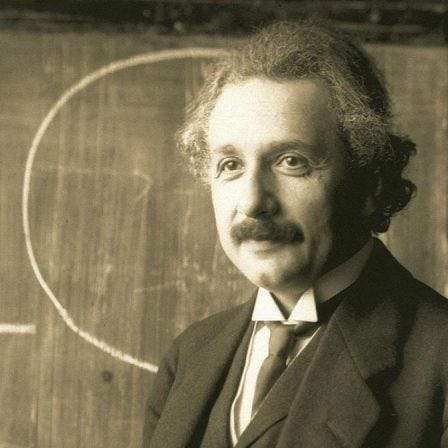
The example Andreessen offered was Albert Einstein.
On the subject of physics, Einstein was one of the most gifted scientific minds of all time. His theories of relativity and his advances in our understanding of the physical universe are unparalleled. Only a tiny fraction of humanity can confidently understand and explain his theories and proofs. The world is a better place because of the work of Albert Einstein.
On the subject of politics, Einstein was not a pioneer. His views are well known, as he published many letters and articles on political subjects, and he believed it was both proper and appropriate for him to do so—though his views were already widely available and shared by millions of others, including the leadership of the Soviet Union. Similar views were also held by Mao in China, who was then rising to power and had yet to subject millions of Chinese to grinding poverty and early death through starvation. His Why Socialism? letter, published in 1949, begins:
Is it advisable for one who is not an expert on economic and social issues to express views on the subject of socialism? I believe for a number of reasons that it is.
Early on, he lays out his reasoning for socialism, and it is born of two contradictory beliefs: first, that humans are predatory; and second, that some other breed of humans will restrain this predatory nature through socialism.
But historic tradition is, so to speak, of yesterday; nowhere have we really overcome what Thorstein Veblen called “the predatory phase” of human development. The observable economic facts belong to that phase and even such laws as we can derive from them are not applicable to other phases. Since the real purpose of socialism is precisely to overcome and advance beyond the predatory phase of human development, economic science in its present state can throw little light on the socialist society of the future.
Second, socialism is directed towards a social-ethical end. Science, however, cannot create ends and, even less, instill them in human beings; science, at most, can supply the means by which to attain certain ends. But the ends themselves are conceived by personalities with lofty ethical ideals and—if these ends are not stillborn, but vital and vigorous—are adopted and carried forward by those many human beings who, half unconsciously, determine the slow evolution of society.
This contradiction carries on throughout the rest of the essay and remains, to this day, an unresolved issue within camps that believe government control is the solution to individual “selfishness.” He writes that humans are simply incorrigibly corrupt:
If we ask ourselves how the structure of society and the cultural attitude of man should be changed in order to make human life as satisfying as possible, we should constantly be conscious of the fact that there are certain conditions which we are unable to modify. As mentioned before, the biological nature of man is, for all practical purposes, not subject to change. Furthermore, technological and demographic developments of the last few centuries have created conditions which are here to stay.
Here, his view is not only that humans are fixed and immutable, but that technological and demographic “realities” are fixed as well. He immediately adds the idea that the past pastoral model was ideal:
The time—which, looking back, seems so idyllic—is gone forever when individuals or relatively small groups could be completely self-sufficient. It is only a slight exaggeration to say that mankind constitutes even now a planetary community of production and consumption.
So, humans are fixed and immutable, and we are technologically stuck and demographically expanding—so the problem is:
The economic anarchy of capitalist society as it exists today is, in my opinion, the real source of the evil. We see before us a huge community of producers the members of which are unceasingly striving to deprive each other of the fruits of their collective labor—not by force, but on the whole in faithful compliance with legally established rules. In this respect, it is important to realize that the means of production—that is to say, the entire productive capacity that is needed for producing consumer goods as well as additional capital goods—may legally be, and for the most part are, the private property of individuals.
The whole thing can be found here.
Like Andreessen, I find this essay comically inept and not in the least insightful. Any college campus in 1949—or today—had plenty of students and professors who would have made the same points for the same reasons, and they would have been wrong about much of it. At least in 1949, much about the true nature of the Soviet Union was less well known, and socialist China had not yet used socialism to “address” the predatory nature of humans in ways that would later end millions of lives.
Most liberals and pro-government advocates today recognize that private markets and capitalism allocate resources far better than centrally planned socialist economies, though they still want the heavy hand of government to redistribute the resulting prosperity more evenly. Fair enough. But Einstein was advocating for a political system that was already known to fail—and is even more clearly so now. His physics have stood the test of time; his politics did not withstand even the mid-20th century.
Artificial intelligence does not suffer from this problem. It is a domain expert in everything, even if it has not yet redefined physics or any of the sciences. But that day is coming. And we no longer have to listen to experts in one domain opine confidently in another and assume they possess expertise in far-flung fields. We now have a domain expert on call 24 hours a day.
There is one caveat I would note. In many instances, you have to dig with AI—ChatGPT, at least—to reach that expertise. It took several attempts on my part to get ChatGPT to link to the 1949 article, and along the way the AI did a good job of defending Einstein against what it described as “some views” regarding his left-wing politics. As I have noted here, AI systems, as of now, tend to defend the status quo in most instances, and you sometimes have to dig a bit to reach uncomfortable material about politics—and perhaps other subjects as well.
Still, dig you can. And if you use the prompts and tools correctly, AI is an incredibly powerful and wonderful advancement of human knowledge.
I admire Einstein in physics—but on politics, he earns a big, fat F, and I don’t have to listen to him about anything other than what he’s expert in.