


Here is a roundup of stories to make your Sunday a more thoughtful one.
I’m making some changes to this Substack to make it more broadly appealing and useful. My personal website, where I sell books and showcase various creative projects, remains at tomroushonline.com.
Here, I’m going to add guest writers, offer new summaries, and cover useful developments in health, male development and psychology, technology, and occasionally the arts—mostly movies, since that is what I know best.
I’d love to hear from readers. Please send me your suggestions for subjects you would like to see covered.
The GPL-1 Train Is Still Rolling Along
I’ve been listening to Peter Attia for some time—well before AI and before the GLP-1 craze got underway in earnest. He is a well-established medical authority who, I think, frames the questions surrounding healthy aging exceptionally well. He doesn’t promote or overhype any particular process or product, and he offers unique insights.
He is cautious and relies heavily on his medical authority—qualities that I think can, and often do, become liabilities. Still, I take his words and advice seriously, particularly when he refers to medical studies. He reads them carefully and offers insightful commentary on their findings, limitations, and practical significance.
His early take on GLP-1 drugs was not enthusiastic, by the way. I recall him expressing the widely held concern at the time that Ozempic and similar drugs were creating “skinny-fat” people—individuals who lost weight but whose body scans showed losses in muscle mass and bone density as well as fat.
He wasn’t saying that losing fat with these drugs was bad. Rather, he believed the treatment was not being paired with the necessary lifestyle changes and that, like every other dietary fad, its popularity would eventually pass and users would regain the weight. He has changed his tune quite a bit since then.
He has now released a review of a study specifically designed to determine whether GLP-1 drugs can slow aging. Spoiler alert: the study suggests they can, which brings me to something I’ve noticed and find highly interesting.
Our knowledge of these drugs is far from complete, and they appear to do much more than simply suppress appetite. They change our relationship with human desire and produce other effects that we are only beginning to understand.
Here he describes the test:
Researchers began treating female mice at around 20 months of age—roughly equivalent to a 60-year-old human, and more relevant to a potential longevity intervention than beginning treatment early in life. Animals received daily subcutaneous injections of either 10 nmol/kg semaglutide or a comparable volume of saline.
Its funny to me that they gave the control group injects as well, but just of saline. The test was built to see if it extended life. But there was an additional wrinkle;
A separate experiment directly compared saline-treated controls, semaglutide-treated mice, and calorie restricted (CR) mice, with 10 animals per group.
It is well established that calorie restriction, or CR, can extend life. It works. You might not want to live longer under those kinds of restrictions, but eating less clearly can increase longevity, all other things being equal.
The study therefore included three groups: mice treated with a GLP-1 drug, mice that received only saline, and mice whose food intake was restricted.
Pretty interesting. So, what was the result?
The median lifespan of semaglutide-treated mice was significantly longer than that of controls—834 days in treated mice versus 742 days in controls. Notably, the clinical conditions that brought animals to the study endpoint were distributed similarly between groups. Semaglutide-treated mice did not simply experience fewer tumors, for example; rather, death appeared to be delayed across several categories of age-related decline—consistent with what you’d expect from a truly geroprotective intervention. That is a meaningful result, particularly because treatment was started later in life at a clinically relevant dose.
Attila also reports:
Importantly, survival was not the only encouraging finding. In separate three-month cohorts, semaglutide-treated mice performed better than controls on tests of spatial memory and spent more time exploring unfamiliar environments. They also showed better motor coordination and physical endurance, even after adjustment for body weight, and cleared glucose more effectively during a glucose-tolerance test.
Whoa! That’s a 12.3% increase in lifespan, courtesy of fewer deadly events. If this result were replicated in humans, it could amount to roughly an additional decade of life—with fewer health problems near the end.
OK, now the caveats. Attila notes several:
Perhaps the most obvious consideration is that this study was conducted only in female mice. This isn’t a criticism—this is the first study to investigate lifespan with GLP-1–based therapies, and it is entirely reasonable to look for a signal in one sex before doubling the resource utilization to test both—but it is a limitation to keep in mind.
The less obvious (but perhaps more important) consideration is the lifespan seen in the control group. While not wildly outside the range of published lifespans, a median of 742 days is shorter than what is observed for this strain of mice in many lifespan studies, while the semaglutide-treated mice lived closer to what might ordinarily be expected. For context, female mice of the same strain had a median lifespan of 866 days in a large Jackson Laboratory study. Cross-study comparisons are imperfect because substrain, diet, housing, handling, and other environmental factors can all influence lifespan. Still, this is an important consideration when studying geroprotection.
So these lady mice didn’t live that long compared to the life of other mice, and so the longer life getting the GLP-1 drugs can only be seen within the context of the cohort. Fair enough, Perhaps this mice neighborhood wasn't ideal.
What about the calorie restricted mice? Did they do just as well as the GLP-1 mice?
Caloric restriction reliably extends lifespan and delays functional decline in mice, raising the possibility that semaglutide was simply producing a pharmacological version of the same intervention. To explore this possibility, the researchers compared semaglutide-treated mice to animals whose daily food allotment was reduced by 24%, matching the reduction in intake caused by semaglutide.
The two interventions produced similar reductions in body weight and fat mass, but very different patterns of eating. Like controls, semaglutide-treated mice consumed their food gradually throughout the day, just in smaller quantities. The CR mice ate nearly all of their daily allotment soon after it was provided and then underwent a prolonged fast. They also became more active shortly before their next feeding, consistent with food-anticipatory behavior, and showed larger shifts in fuel use between fed and fasted periods. Semaglutide therefore reduced calorie intake without producing the same cycle of gorging, fasting, and anticipatory activity.
Despite these different feeding patterns, the CR and semaglutide groups followed similar trajectories on measures of total movement and physical endurance. On other assessments, however, semaglutide performed better: improvements in spatial memory, exploratory behavior, and glucose control were observed in the semaglutide group but not the CR group.
These are very promising results. But the larger question is why. Why is this happening? The researchers examined the cells of each cohort and identified several positive changes in the GLP-1 group:
After three months of treatment, semaglutide was associated with changes across the brain, immune system, and other tissues, suggesting that its effects were not confined to body weight and glucose regulation.
One of the most interesting findings came from the hippocampus, a brain region essential for learning and memory. The hippocampus is one of the only areas where neurogenesis—the growth of new neurons—continues throughout life, though it declines with age. Semaglutide-treated mice had more cells expressing markers associated with neurogenesis than controls. While this is not proof that these cells matured into functional neurons, it does give a plausible biological explanation for their improved performance on the spatial memory test.
Aging is also associated with dysregulated immune function, including chronic low-grade inflammation, as well as cellular senescence. Senescent cells are ones that have stopped dividing but remain biologically active, often releasing inflammatory molecules that can damage surrounding tissue. Mice treated with semaglutide showed reduced expression of inflammatory cytokines and markers of cellular senescence, while broader gene expression patterns suggested altered immune-mediated responses.
The news in this article was very promising. There have been other stories about GLP-1 drugs lately, however, and not all of them have been encouraging. These include reports of sudden blindness, the danger of aspiration during surgery, and the readily observable phenomenon of people who are only slightly overweight obtaining these drugs with very little medical oversight.
The benefits are real enough and plain to see. I’ve never seen a weigh loss plan so effective and I’d include in that summary surgical weight loss plans that use radical alternation to a person’s digisitive tract. In a decade, will anyone still undergo these procedures? Here’s what a Biliopancreatic Diversion with Duodenal Switch (BPD/DS) does:
The Biliopancreatic Diversion with Duodenal Switch, abbreviated BPD-DS, begins with creation of a tube-shaped stomach pouch similar to the sleeve gastrectomy. It resembles the gastric bypass, where more of the small intestine is not used. The Procedure: Following creation of the sleeve-like stomach, the first portion of the small intestine is separated from the stomach. A part of the small intestine is then brought up and connected to the outlet of the newly created stomach, so that when the patient eats, the food goes through the sleeve pouch and into the latter part of the small intestine. … The food stream bypasses roughly 75% of the small intestine, the most of any commonly performed approved procedures. This results in a significant decrease in the absorption of calories and nutrients. Patients must take vitamins and mineral supplements after surgery. Even more than gastric bypass and sleeve gastrectomy, the BPD-DS affects intestinal hormones in a manner that reduces hunger, increases fullness and improves blood sugar control. The BPD-DS is considered to be the most effective approved metabolic operation for the treatment of type 2 diabetes.
Ugg. No thanks. Note, this horrifying process has been done to teenagers. GLP-1 drugs can replace this kind of medical intervention, and they might do a while lot more. Peter Attila’s full article on the study above (which he oddly doesn't name) can be found here.
A Fish From Shakespeare’s Time
There is bnountiful evidence that humans can live longer than they do currently, the most compelling of which is just how much longer we live now copared to just three generqations back. Here is the graph:
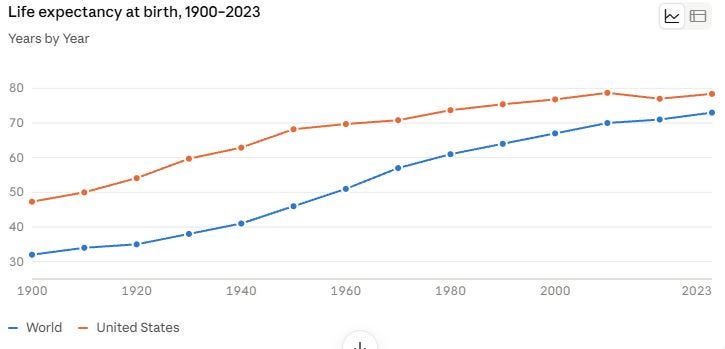
People lived on average to 48 in 1900, and now life expectancy is about to cross 80. That’s impressive, and of course, it wasn’t evolution; it was progress and innovation. Still, the message persists that humans must die and that the limit on human longevity has been, or soon will be, reached.
Most animals don’t live as long as humans, and none have managed to extend their own lifetimes the way people have. But there are plenty of animals that live longer than people. A lot longer. And since they are not the product of human ingenuity, but of nature’s relentless effort to optimize, there is reason to believe the human limit has not been reached.
Consider the following article about lake sturgeon from the Journal of Fish Biology.
Effective fishery management policy depends on accurate life-history data, particularly for harvested species. Longevity is a core life-history trait that is directly related to annual survival and lifetime reproductive potential, but fish longevity is generally not well documented, particularly for long-lived species. We used capture–mark–recapture data spanning 44 years as an alternative method to estimate sex-specific adult lake sturgeon (Acipenser fulvescens) average annual growth and longevity for five populations in the Laurentian Great Lakes. We determined individual fish average annual growth and fit population and sex-specific exponential lines for average annual growth as a function of fish length at initial capture. We used the exponential equations to estimate age for 180 cm fork length (FL) female and 160 cm FL male lake sturgeon from each population by sequential subtraction of annual growth increments and assuming age at onset of sexual maturity of 24 and 15 years for females and males, respectively. Average annual growth estimates varied between sexes and among populations and ranged from 0.26 to 1.15 cm year−1. Estimated ages also varied among populations. Age estimated for a 160 cm FL male lake sturgeon across the five populations ranged from 90 to 279 years. Age for a 180 cm FL female across populations ranged from 99 to 427 years. Our data suggest lake sturgeons live much longer than currently believed.
They've been tagging and measuring these fish for 44 years, which tells them how fast sturgeon grow at different sizes. Working backward from the size of the largest fish, they estimate that some lake sturgeon in the Great Lakes predate both the U.S. and Canada. There could be a fish swimming there today that hatched around the time Shakespeare was putting the finishing touches on Hamlet, some 425 years ago.
Here is the graph that charts the fish ages by the location they were acquired.
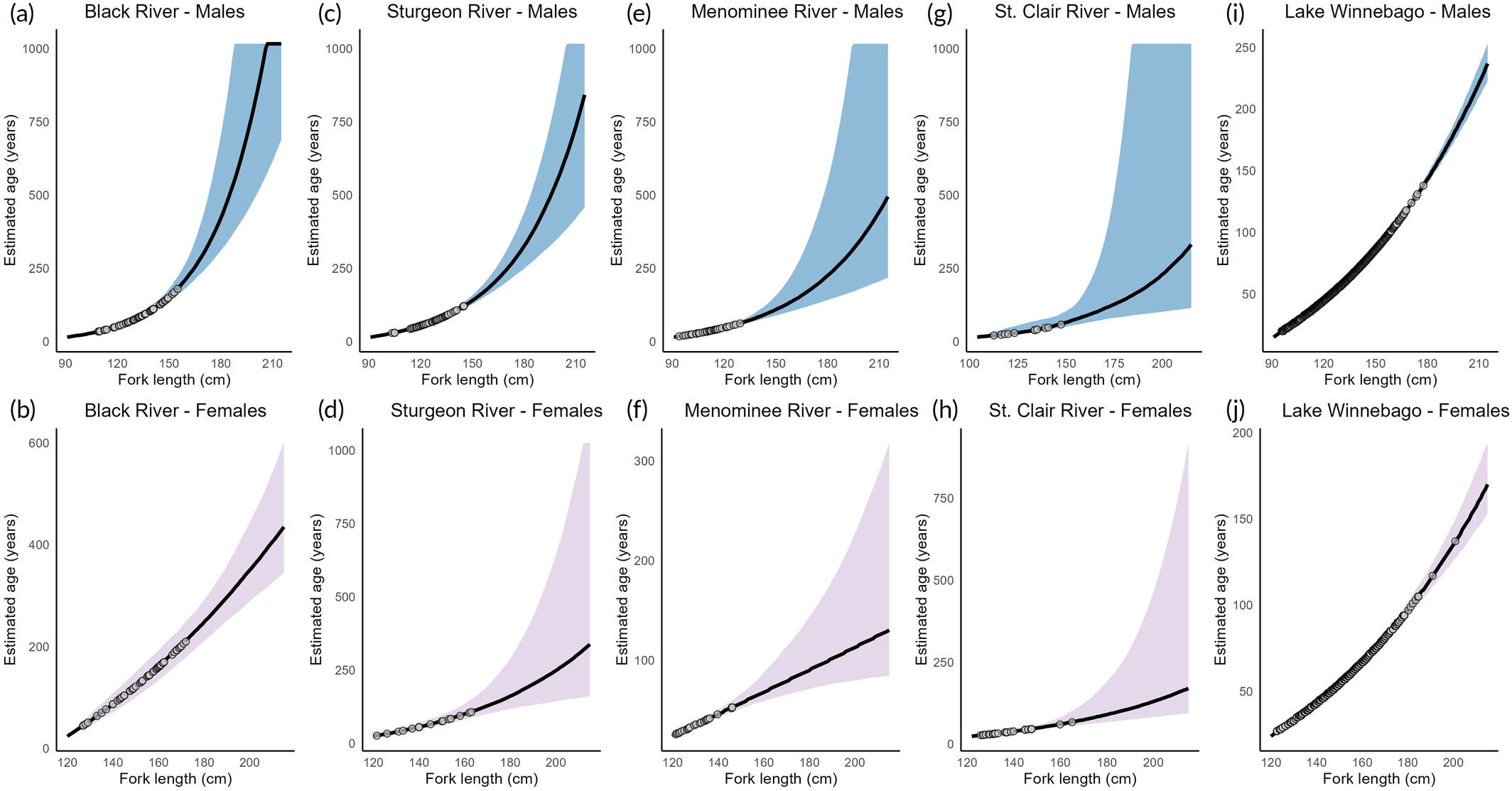
Here is the caption about this graph.
Estimated age (years) of adult lake sturgeon as a function of FL from five populations and for both sexes. Individual points represent fish for which mean annual growth rates were available and used to backcalculate age using an iterative subtraction of predicted growth increments until reaching the expected size and age at maturity (see Section 2). Solid black lines represent median predicted age-at-length relationships, and shaded ribbons indicate 95% confidence intervals generated from bootstrap resampling of the exponential growth relationship. Please note that due to the variability in age estimates (y-axes), the panels do not represent standardized ranges in the data presented.
These are some remarkably old fish, and they prove it can be done. Complex living organisms, creatures with eyes, hearts, muscles, and livers, can live at least 152 years, the age of the oldest lake sturgeon on record, and likely far longer. Since 1900, we've added more than 30 years to the average human life. If we can close the gap with these fish, those gains may turn out to be just the beginning.
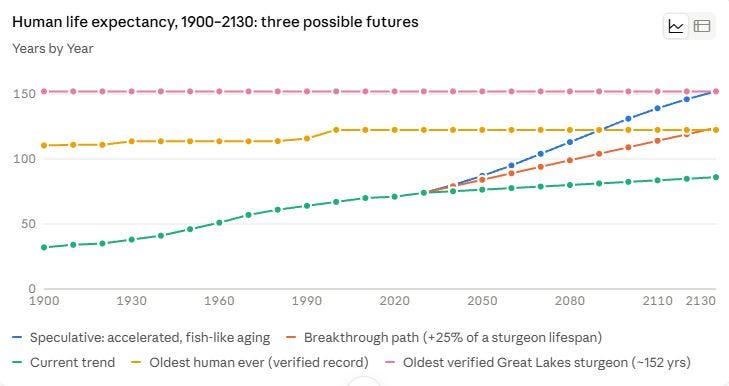
How can these breakthroughs be achieved? Well, AI would certainly help, if we can keep from screwing that miracle up.
The whole article on fish ages can be found here.
P-Doom
It was another big week in AI news. P-Doom was predicted from every quarter, and the CEOs of several leading American AI companies floated the idea that development should be slowed because of its potential for harm. The widely reported “Hugging Face” incident was discussed ad nauseam, with little agreement about what actually happened. The Moonshots team discussed the news at length, and its conclusions ranged from the practical to the deeply cynical. The dominate conclusion is that every AI company is queuing up for the big IPO pay day and they need to have enough regulation to protect them from liability, they need to float the idea of how powerful the technology is, and they need to be sure the government restricts the open models that the Chinese are pushing. Otherwise, how ya gonna get paid?
In all the stories about what AI might do, no plausible pathway to doom is ever presented other than the obvious one: humans might use AI to do something terrible, such as develop a biological weapon. For me, that is the most frightening possibility—but it is also a scenario for which solutions exist. We have lived under the threat of nuclear annihilation for 80 years, and we are still here.
The idea that AI will somehow destroy humanity on its own, through some kind of Terminator-like consciousness, is preposterous on its face. It reflects two particularly common aspects of the human condition.
The first is anthropomorphism: the very common practice of assigning human characteristics, emotions, intentions, and motives to nonhuman things. Consider how regularly we describe the following in human terms or grant them human capacities:
Animals: Dogs are often described as moral beings—or even as morally superior to humans.
Cars: In life and in movies, cars are regularly given names, personalities, and human characteristics. Consider Herbie the Love Bug.
Robots: Whether good or evil, robots are portrayed like C-3PO or the Terminator. They are shown to possess human motives and capacities, such as the desire to serve or to kill.
Nature: Nature is often described as possessing a wicked, divine, benevolent, or otherwise humanlike personality.
Viruses: A virus is said to “outsmart” the immune system, while the body “fights back.”
Groups of people: Communities and nations are described as having been “wounded” and needing time to “heal.”
God: Human beings have long described God in distinctly human terms, complete with emotions, intentions, preferences, and judgments.
And now, along comes AI. It can produce speech, sounds, and images; solve mathematical problems; and perform many other remarkable tasks. It seems like an extraordinarily powerful human—and we all know that humans can do monstrous things and often do.
History is a long tale of war and bloodshed, interspersed with periods of invention and prosperity. AI, however, is a product built on mathematics and statistics. It is not imbued with any special powers.
But if there is one thing humans seem to love indulging in, it is fear-based mania—whether over witches, climate change, or the latest perceived threat. And so, here we are.

And, of course, every technology company that has invested enormous sums in a product wants protection from lawsuits over the harm someone might cause while using that product. Nor does it want to see a new competitor arise.
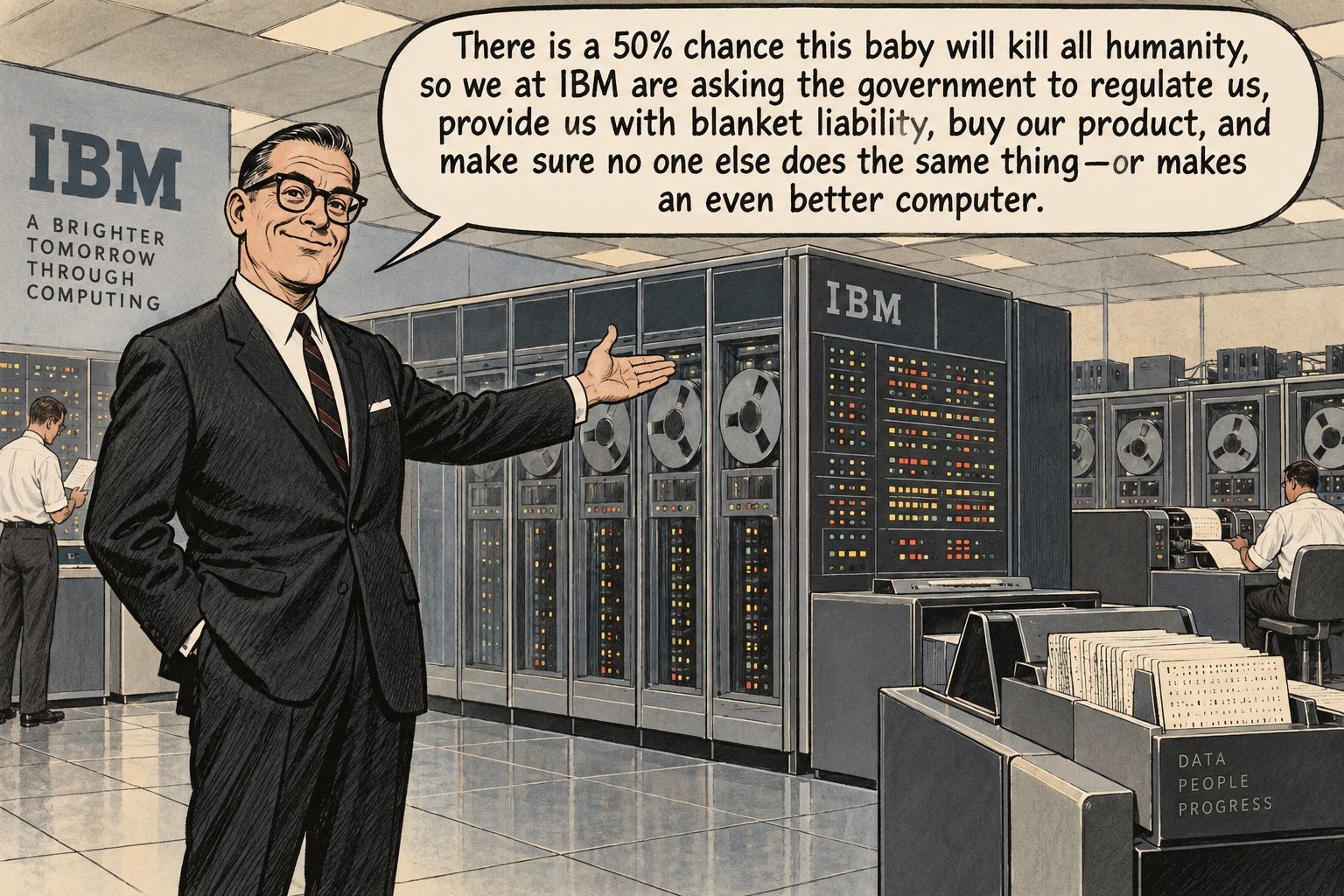
The AI companies—Anthropic in particular—are doing everything they can, however, to undermine their own businesses in what I suspect is a misguided approach to the authorities. Someone needs to get through to Dario Amodei and persuade him to simply shut up. His entire manner is off-putting, and his presentation makes AI appear to be something created by weird, angry, socially detached technologists who no longer understand—or cannot control—what they have built. He is a well known adherent to the naïve and entirely fake ‘effective altruism’ creed. This is cold hard self interest dressed up as a social good. Don’t far for it for a second.
This is what is driving the mania: the CEO of a leading AI company making sensational claims to a legacy media establishment that thrives on fear and has an interest in maintaining its control over information and power.
Go to approximately 3:25 and observe:
So, he wants to give Anthropic to the government—or to some worldwide collective of governments? This is crazy collectivist madhouse talk.
Something tells me he’s going to end up rich, but the promise of AI—which is generational—will slow to a crawl, and he’ll call himself a hero for stopping it long before anyone uses it for the massive good it can create or the harm and havoc it could wreak.
A good idea for him and every other AI CEO would be to speak about the incredible good AI can and is doing every time they talk about how it’s going to kill us all.
Prediction: We’re not all gonna die.
Theaters Aren’t Dead
Great news for those of us who love movie theaters. I’ve spent many wonderful hours watching movies with friends, on dates, alone, and with my kids. Here’s a look at how the summer box office has performed over the past decade:
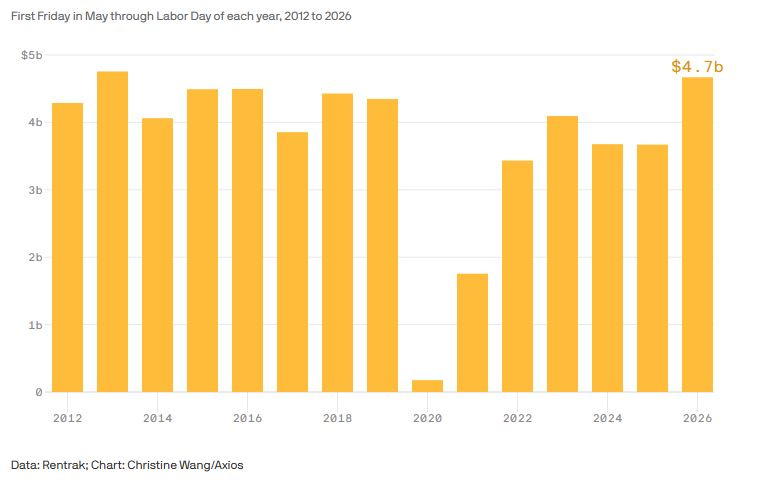
Great news, but also a sad reminder of what 2020 did to movie theaters and so much else. What a miserable legacy. Did closing theaters save lives? I’m not convinced. The response ruined careers, set children back, and caused lasting harm.
But look at the rebound. Movie theaters are back, baby! That’s great news for our culture.
What brought audiences back? Better masks? No—better movies, as always. Here’s this summer’s box office by movie:
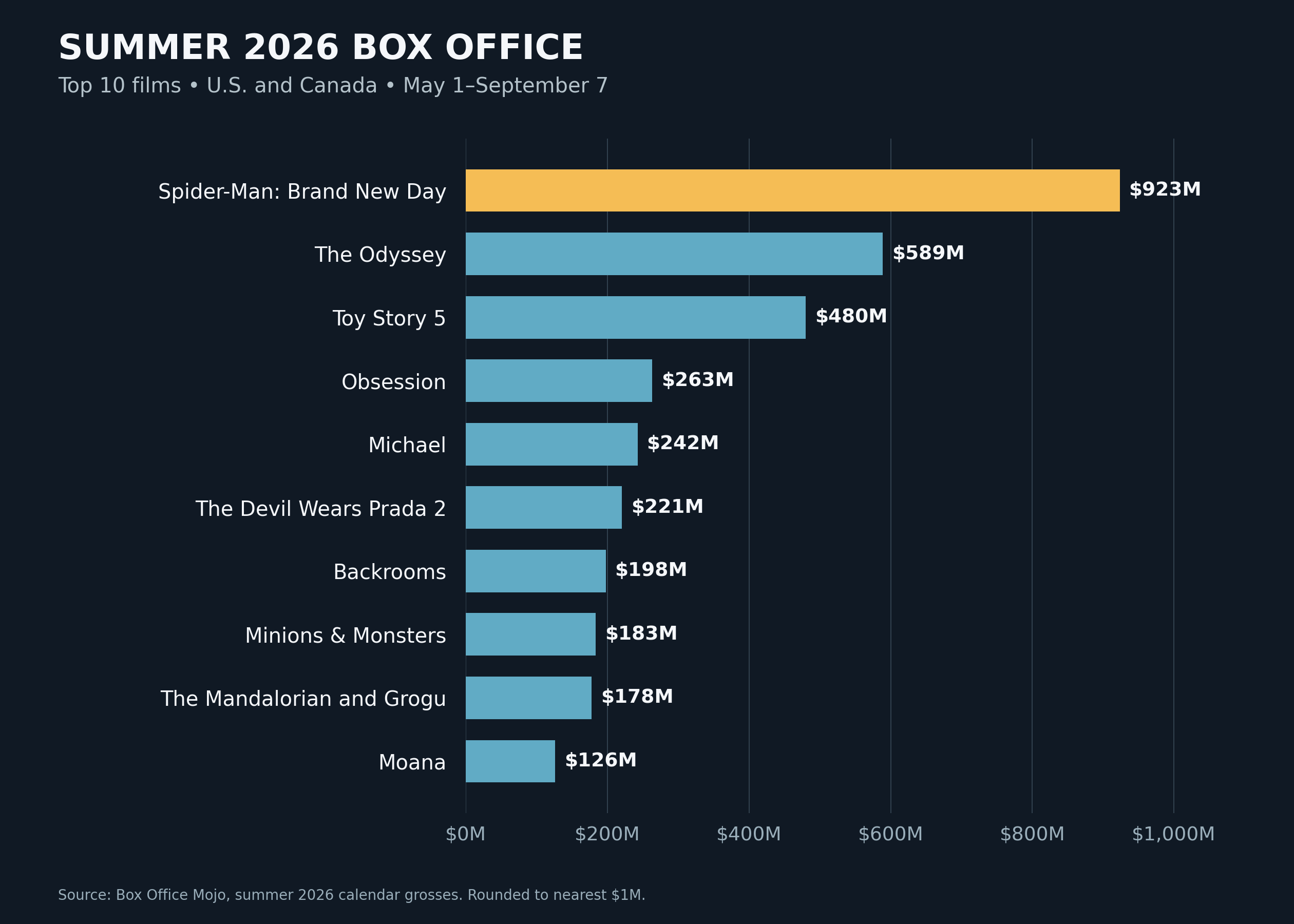
A few trends stand out. First, the runaway success of yet another Spider-Man movie. I don’t quite get it, but audiences clearly do. Spider-Man has been drawing crowds for more than two decades: the first film starring Tobey Maguire opened on May 3, 2002. Observe the trailer from that film:
Here is the trailer for the new one, some 24 years later:
Again, I am not the target audience for this movie or any other marvel franchise, but the demand for superhero movies is huge and these movies inspire something in audiences. I don’t pretend to understand it, but nearly a billion in box office don’t lie. I appreciate these movies more now than I used to. Thank you Spiderman for keeping the theaters viable.
The Odyssey did incredibly well for a movie based on a story thousands of years old. To me, that’s more evidence that movies are still commercially viable and still help shape our culture.
Matt Damon and Tom Holland play father and son, and their bond feels real and deeply shared. Anne Hathaway beautifully portrays a mother defined by sacrifice and loyalty. The other characters reveal human frailty and weakness alongside the nobility woven through the ancient myth.
I thought it was a great movie and saw it twice. Some conservative commentary focused on trans actor Ellen Page’s casting as a warrior, which I found visually unconvincing, and the casting of a black actress as Helen of Troy, which I felt added little to the film. Neither role needed a recognizable star; the movie would have worked just as well with unknown actors.
It’s been a great year for Tom Holland and Robert Pattinson, who was very effective in The Odyssey. Still, I don’t see quite the same movie-star quality in Holland that I see in, say, Tom Cruise. Tastes change, though, and Gen Z has its own stars. There’s something passive or mildly feminine about Holland and some other younger male actors, but perhaps that’s part of what draws young women to the movies. A young Brad Pitt was also very pretty, though he’s grown more rugged with age. Cruise is in a movie-star class of his own. He’ll set records for films and box-office grosses that will be difficult to surpass.
Note the relatively poor performance of the latest Star Wars film compared with the others. So Spider-Man is still relevant, while Star Wars, perhaps, is not. Interesting. Backrooms was the work of a very young filmmaker acting nearly alone. Star Wars is a 50-year-old franchise with Disney behind it, and yet there they are. Has Star Wars finally played out?
Toy Story 5 is another tale of longevity in the industry.
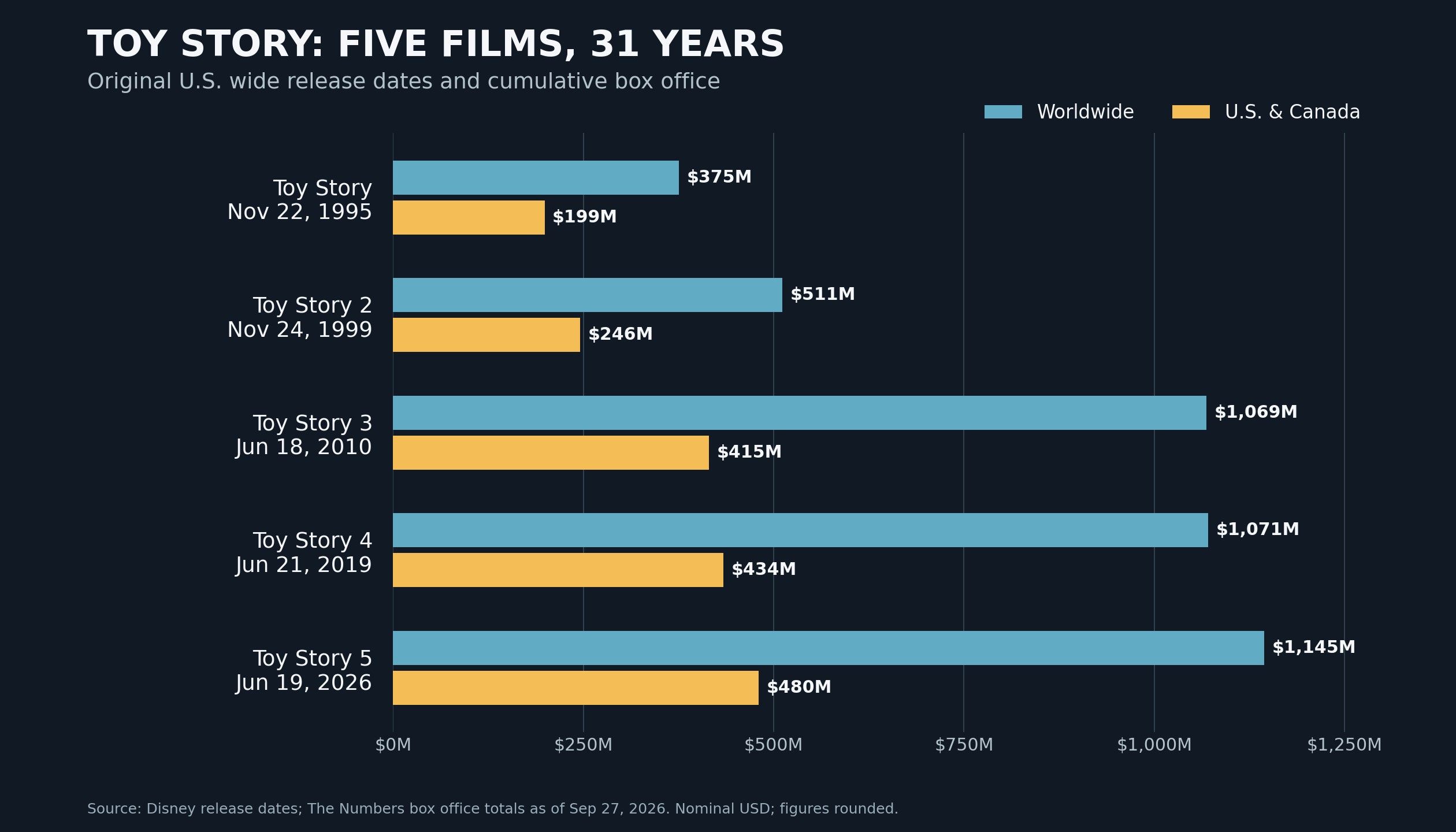
A child born when the first Toy Stray movie was released would be 31 years old today. These films are as popular today as ever.
So, overall, a great year. And note, these films are the first crop to be approved well past Covid and so outside the massive woke window of the period. There will be more.
Tha’ts it for this week. If yo like reading these stories on Sunday, let me know. I’m trying to make my posts useful and engrossing and not just stuff I care about. Suggested areas fo inquirely would be most welcome.
https://www.boxofficemojo.com/season/summer/2026/