A truism is something that is generally and obviously true, though not necessarily precise in every case. One such truism that appears to hold across populations is that societies tend to get more of what they subsidize and less of what they tax. People respond to incentives, and directing public money into one sector at the expense of another has effects over time.
If this is true, then taxing wealth while subsidizing poverty may create a disincentive for the former and an increase in the latter over time.
In many parts of the United States—but especially in its most populous state, California—this appears to be only partly true. The state has seen significant increases in its share of poverty and homelessness. At the same time, however, it has also experienced an increase, not a decrease, in its share of very wealthy individuals. What explains this?
Innovation is the explanation. The productive sectors of the California economy are so powerful—and generate such massive gains in productivity for those who use their products—that the state has, at least so far, managed to outpace the drag created by rising poverty. California taxes income, on top of the huge share taken by the federal government, and it also taxes capital gains (as regular income.)
What the state is now contemplating is a tax on wealth in general—a tax on the perceived and unrealized value of assets that have not been monetized as income or a capital gain. Such a tax could apply to stock holdings that have never been converted into cash. Simply continuing to hold those equities would require a real, hard cash transfer to the state. The same would apply to real estate and other asset categories, including shares in businesses that have not yet generated profits or even income.
This idea is so potentially destructive that many European nations have tried and later abandoned similar approaches. It effectively moves toward treating all wealth as subject to ongoing claims by the state, with individuals functioning more like stewards than full owners. Over time, it can set in motion a steady transfer of wealth to the state, which then allocates it according to its own priorities—whether those priorities are virtuous or misguided.
One does not need to be an economist to understand the implications.
Threatening the Consumer Surplus
Should any political entity enact a tax on wealth, it is shifting resources from one known collection of assets to another, only partially known, set of actors. Realized value transferred to a political entity takes money from one group—the individuals who created or accumulated the wealth—and moves it into government control, where there is typically far less transparency regarding how those assets are ultimately allocated.
If there is fraud within the government, then the transfer becomes a direct movement of resources from the productive parts of the economy to criminal or unproductive actors. Perhaps some of that money is recirculated, but it is unlikely to return in ways that generate meaningful or positive economic benefits. Criminal organizations are not known for making strategic investments in innovation or productivity.
Even in the absence of corruption—if the funds are simply redistributed to those in need—the same structural shift occurs: wealth and productive capacity move from those who have accumulated it through innovation or frugality to those who have not carried the same economic burden. This, in itself, may represent a net loss in productive efficiency.
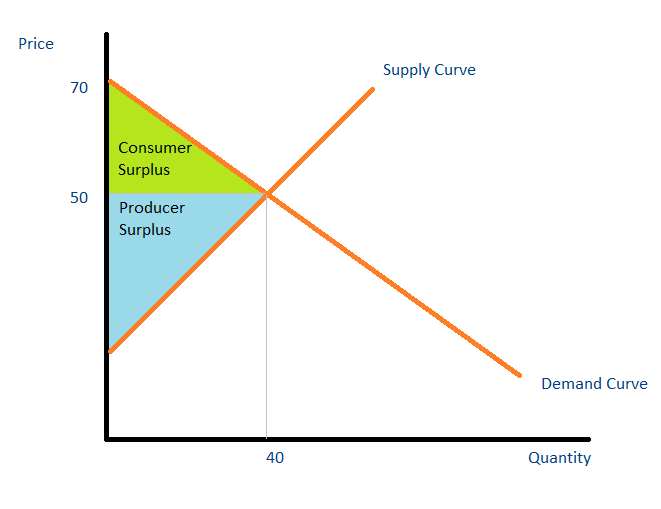
But there is a far greater threat to overall welfare than redistribution alone: the erosion of consumer surplus.
A consumer surplus is a recognized concept in economics, and it describes the benefits to a buyer that are greater than the cost of a product. So, put simply, if I pay $75 for something, and I get $100 of value from it, then the consumer surplus is $25. If the seller asks $110 for something of which I can only gain $100, then I will not buy that product if I can avoid it. If I have no choice, and I pay $110, then the producer has consumed my surplus.
This surplus exists every day in every market. It operates quietly, embedded in our choices and in the benefits we receive as buyers. The idea of consumer surplus asks a simple question: how much better off are buyers because a market exists at all? In most cases, over the long term, a large share of the benefits in any transaction accrues to the consumer. As the buyer, you are often “winning” in ways that aren’t immediately visible.
Take a house, for example. Suppose you buy a home for $500,000 and finance it with a mortgage. From day one, you have a place to live—something whose full value is difficult to quantify, but undeniably real. The seller receives a clear benefit in the form of $500,000, and the bank benefits from interest payments. But over time, the surplus increasingly accrues to you, the buyer, as you continue to live in and use the home.
Thirty years later, the seller has long since exited, and the bank is no longer collecting interest. Yet you are still in the house, continuing to receive its benefits. Over that span, the accumulated value of living in the home can far exceed the original purchase price.
You can apply this thinking to nearly any product—cars, food, clothes, internet access, your smartphone, and more. In the case of highly innovative companies, consumer surplus is be enormous. Much of the value of services like Google’s email accrues to the user, not the company. Consider Substack: much of the platform is free to use, allowing people to read and write at little or no cost. While the company earns revenue in various ways, the majority of the benefit flows to the user. The consumer surplus of AI will be 99% to the consumer which will occur even as the pioneers of AI become mega wealthy.
Moving East Of Eden
A tax on wealth is a destructive threat to the existence of markets in which, over the long term, the primary beneficiary is the consumer—all in the name of shifting value in the short term from producers to the government. Such a policy may strip wealth from billionaires, but over the longer term—and by “longer term,” I mean just a few years, or even months—markets will respond, and the true transfer will be from consumers to the government.
Prices will rise as taxes are passed through, which is harmful. Alternatively, some markets will simply fail to exist or never come into existence at all, as government intervention makes the cost of creating new markets too high or too risky.
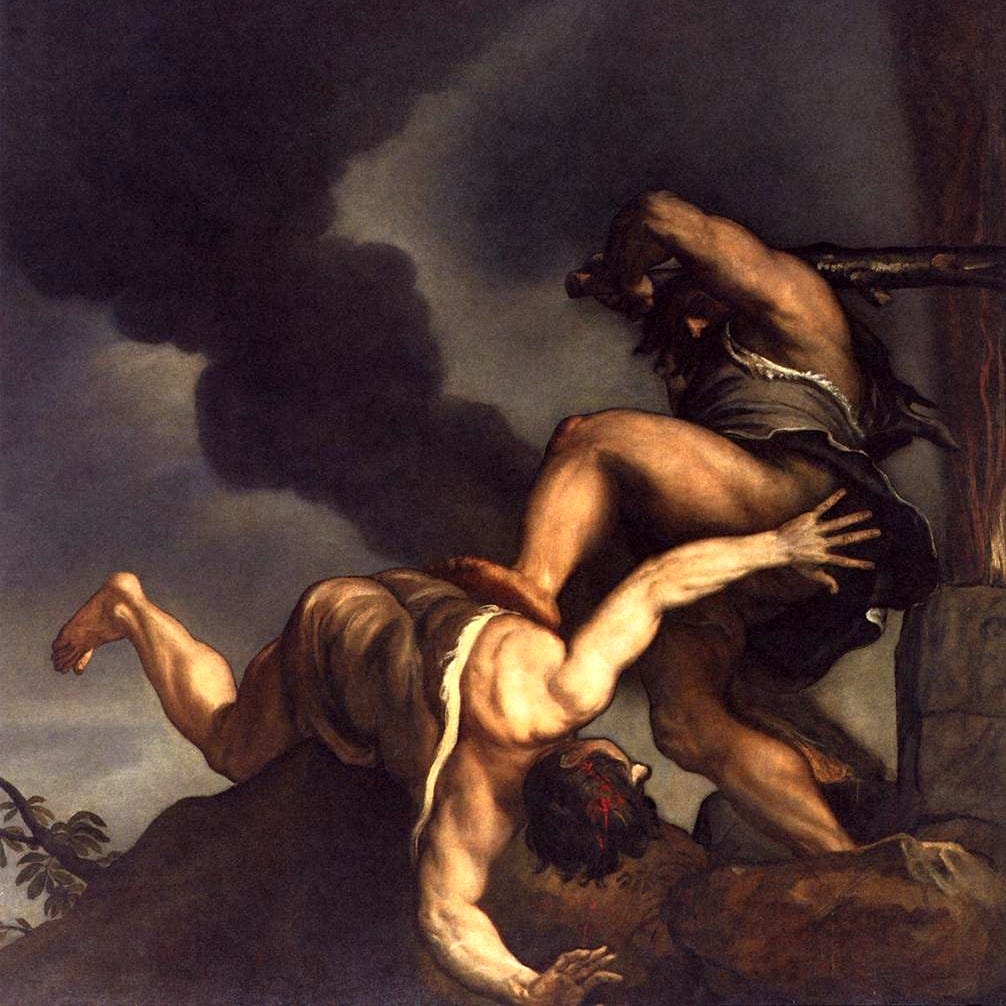
I did not invent the idea of consumer surplus. It is as old as buying and selling itself. But even older than trade is the human impulse toward envy. As far back as the Book of Genesis, we see two men with different roles: Abel is a shepherd, and Cain is a farmer. They are the sons of the first Man; Adam. Both make offerings to God, but when Cain perceives that Abel has received greater favor, he rises against his brother out of sheer envy.
Cain does not become richer by killing his brother, nor does he capture Abel’s value. But his envy—his anger, his resentment at another having more than he does—is momentarily satisfied, and that is enough for him to commit murder. God condemns his farming, and he becomes a wanderer, separated from the divine for the rest of his cursed life. He is sent east of Eden, where he does not immediately perish, but he never receives favor again.
Markets and innovation are the primary forces that raise human living standards and create the surplus so many of us take for granted. They have lifted billions out of poverty and created hundreds of billions of additional years of human life—time that can be devoted to learning, productivity, and further innovation. It is a virtuous cycle.
That cycle is threatened by the envy of those who would tax wealth—not necessarily because wealth should not exist, but because its existence represents both an overwhelming opportunity and a perceived imbalance. Through punitive, forceful action, we risk undermining the very systems that generate prosperity. We may punish the billionaires, but we will not become richer as a result. Instead, we risk becoming poorer together, as consumer surplus evaporates and society declines—like a people cast east of Eden into a world far poorer than the one we inhabit today. This is the fate that California is set to inflict upon itself. The Abel class of the state are already fleeing, and this makes the Golden State quite a bit less lustrous.