

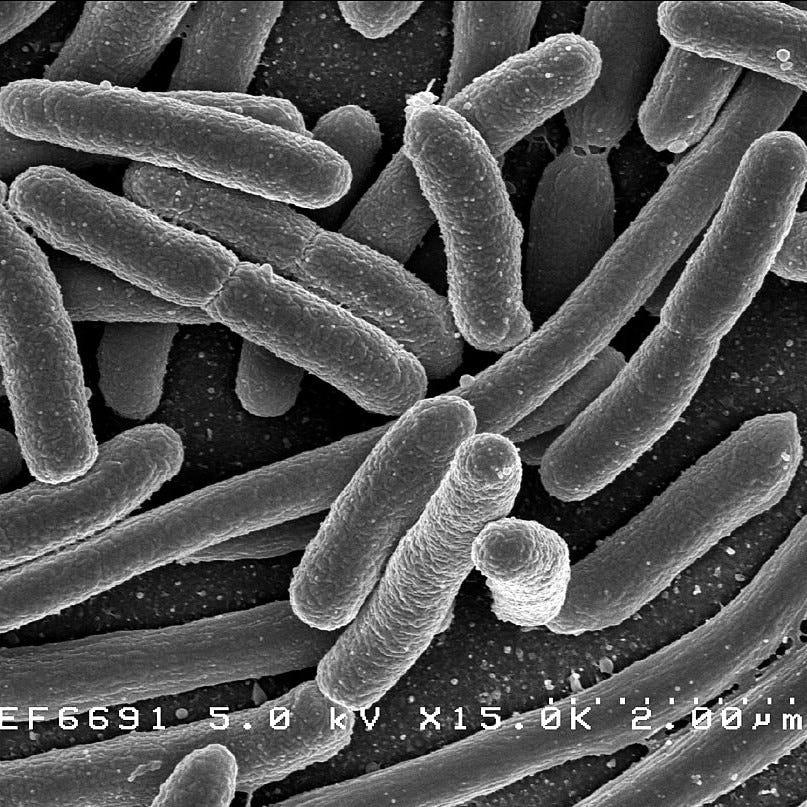
The human understanding of the human body is moving forward at a fantastical pace, and better technologies for measuring and improving the body are already on the market or in the pipeline. It is an exciting time to be a bio-hacker, as the term has developed—or, more accurately, a home-brew doctor. I’m an enthusiastic participant in my own health and highly recommend this practice to everyone else.
Make note: you just can’t trust the medical establishment with your health. Full stop. You can’t. They have their own driving priorities—regulatory, legal, financial, and institutional—and your health is not the number-one priority. It just isn’t. That doesn’t make doctors evil or stupid; it makes them human actors inside a system with incentives that often diverge from individual flourishing. If you care deeply about your health, you have to take ownership of it yourself.
A core piece of background information for understanding how to care for your body is recognizing just how much of your body isn’t you. You are not a single, unified biological entity. You are a stack of biologies, layered and integrated by evolutionary forces to make the whole greater than the sum of its parts.
I first encountered this idea a long time ago, back when I still listened to NPR. I was washing my car, half-distracted, when a story came on about something called a “fecal transplant,” which was exactly what it sounds like. It was gross and disturbing, but the story was about someone whose life had been saved by transferring stool from one person into another via a suppository. The treatment worked because it restored something essential: a healthy gut ecosystem. It was in that moment that I first heard about the gut microbiome, and something fundamental about how I thought of the human body shifted.
Those who are skeptical of the theory of human evolution tend to sneer at the idea that humans evolved from apes. But the story told by the gut is far more unsettling. Taken over the long view, the evolutionary picture is deeply humbling: we evolved up from mere bacteria, and, in fact, we are still a massive stack of cooperating microscopic organisms that collectively generate behaviors motivated by pure self-interest. Seen through this lens, what constitutes the existential “us” becomes far more complicated.
Years passed. I stopped listening to the radio as podcasts took over my audio life, and my curiosity about what we are deepened. Much of that came from listening to the Dave Asprey podcast, where one recurring theme is the vital importance of the mitochondria inside each of our cells. The mitochondria are the so-called powerhouses of the cell, but that description understates their significance. Asprey often describes them—accurately—as ancient bacteria that were incorporated into our cells long ago through a process known as endosymbiosis.
These mitochondria are conversion factories. They take inputs like food and oxygen and turn them into usable chemical energy. Without the billions of mitochondria operating inside us every second, we die. And each mitochondrion is the descendant of a once free-standing organism with its own evolutionary history. They are not incidental machinery; they are the bedrock of what we are.
Another recurring focus of Asprey’s work, echoed by a growing body of mainstream research, is the gut microbiome. Within each human live trillions of bacteria that play a vital role in digestion, immune function, hormone regulation, and even neurotransmitter production. There are so many distinct species involved that if you were to line up all the unique DNA strands in the gut microbiome and compare them to the DNA of the human host, the bacterial genetic material would win by a wide margin. We do not even make up the majority of the DNA that lives inside our own bodies.
So if each of our cells is powered by a collective of once-independent organisms, and those cells themselves rely on another vast ecosystem of microscopic life that outnumbers us genetically, the obvious question becomes unavoidable: what are we, exactly?
It gets stranger. There is mounting evidence that the gut microbiome exerts a profound—possibly dominant—influence on mood, cravings, decision-making, and even personality. These organisms want to live, and it is not unreasonable to assume that their collective survival strategies register as impulses in the human brain. If the gut environment becomes hostile because of poor diet or stress, that imbalance may manifest psychologically as anxiety, depression, or compulsive cravings. A sudden longing for sugar or a visceral aversion to certain foods may not originate in conscious choice at all, but in microbial signaling traveling up the vagus nerve to the brain.
Some researchers now suspect that certain forms of mental illness may originate in the gut, or at least be amplified there. This is still a young field of inquiry, but it already makes earlier debates about human evolution—man versus ape—seem quaint. Apes, after all, are in the same existential boat we are. They, too, are stacks of cooperating organisms governed in part by the legislature of the gut.
In fact, all of the animal kingdom works this way. Cats, hippos, lemurs, frogs, and hawks all carry entire ecosystems within them—creatures along for the ride, doing their part like carnival barkers on the great biological midway of life.
None of this presupposes the existence or nonexistence of a God of creation, at least not in my mind. The universe looks less like a clean, top-down design and more like a series of overlapping experiments in how to organize matter into life—each strange, improbable, and contingent. Perhaps we are stacks of cooperating bacteria. Jellyfish manage to survive without brains. The deepest trenches of the ocean teem with bizarre adaptations. Saturn has rings; Jupiter does not. A single meteor strike can reset the biological clock of an entire planet. What a glorious mess.
My assumption is that life is everywhere in the universe, gathering complexity, breaking down, and rebuilding again. It is a process with a purpose we are unlikely to grasp with our limited perception and brief window of awareness. Humans may be the penultimate creatures of this planet, but we are still in a primitive stage of understanding who we are, where we are, and what we are made of.
With our ancient bacterial origins and our bodies full of separate but essential fellow travelers, we look through a glass darkly—and will for a long time to come. When you become your own doctor, you must always keep in mind how many patients you actually have. The number is not one.
To keep you healthy, you must also bear in mind what your fellow travelers are doing and what they are signaling. Antibiotics, for example, may destroy the bacteria that are making you sick, but they also kill organisms you need. Some of those can be replaced; some take a long time to recover.
What lives on your skin or in your hair that is useful, and need not be washed and stripped away? Is excessive use of hand sanitizer quietly eroding your ability to ward off infection? Some “dirt” is not a bad thing.
Even this area of investigation—the idea that we are too clean, and that many autoimmune diseases may stem from an excessively sterile environment—is relatively new, and it may prove to be one of the more promising avenues for understanding modern illness.